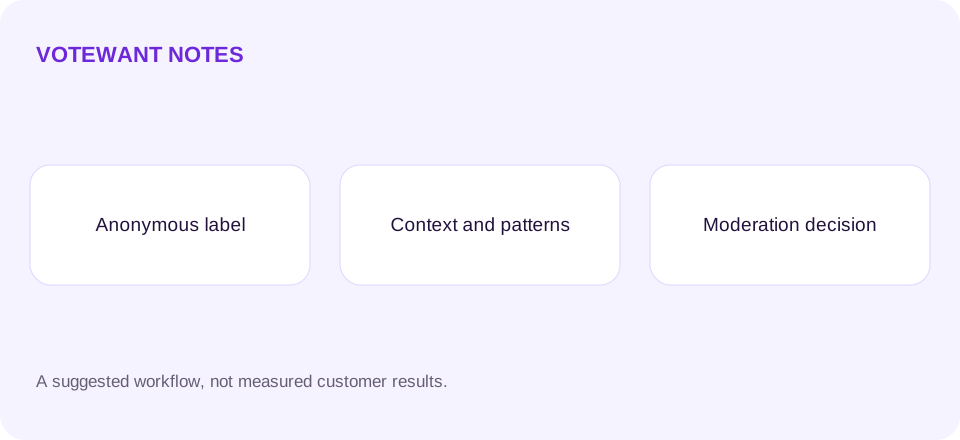

Anonymous feedback lowers the effort required to participate. It also creates uncertainty about identity. A stable anonymous label lets a team recognize a conversation from the same installation, but it does not prove a unique human, a customer account, or a person who has never participated elsewhere.
That distinction matters when you use votes to prioritize work or investigate spam. A board can remain welcoming without treating every anonymous interaction as verified demand. Explain what the identity represents, and use behavior plus context when deciding whether moderation is needed.
An installation is not a person
VoteWant's app integration registers a voter token per installation. That token supports a stable anonymous label for comments and votes. The API documentation explicitly explains that an installation can be reset, so install votes do not count as verified demand.
Someone can use several devices, clear local data, or reinstall an app. Several people can also share a device. Therefore, “12 anonymous installations voted” is a narrower statement than “12 unique customers want this.” Do not turn the first into the second when writing an update or making a product decision.
Look for behavior that needs review
Repeated identical comments, unrelated links, aggressive posting, or coordinated vote changes can justify a closer look. None of these signals alone establishes who is behind the activity. An enthusiastic contributor may post several useful requests; a single quiet account can still leave harmful content.
The OWASP automated threat taxonomy distinguishes threats such as spamming and metric skewing. That is useful background for thinking about abuse patterns. It does not mean VoteWant can identify every automated submission or guarantee a spam-free board.
Moderate the content and explain the boundary
Write a short board rule covering relevance, respectful discussion, and sensitive information. Apply it to behavior rather than to whether someone agrees with your roadmap. A critical comment about an unresolved problem is not spam just because the team finds it uncomfortable.
VoteWant lets owners hide a comment or block an installation on their board. Use those controls proportionately, and remember their scope. Blocking an installation is not a guarantee that the person cannot return through another installation. Maintain a separate process for serious abuse or account-specific concerns.
Keep sensitive details out of public discussions
A public comment should describe the product problem without including credentials, contact details, or private account records. VoteWant screens comments for common personal contact details, but screening is not a complete privacy guarantee. Review what you post yourself and redact screenshots before sharing.
If a team needs sensitive information to investigate, move that exchange to an appropriate private support channel. Keep a sanitized summary on the board when it helps others understand the issue. Read feedback boards versus support inboxes for that separation.
Interpret counts with provenance intact
Keep anonymous votes, verified external demand, internal activity, and agent-submitted requests distinct. Read comments for the task and the consequence, not just the total. A useful request from one person can reveal a significant product problem; a large count can still need clarification.
Explore VoteWant for the current board experience. For a practical decision workflow, read feature voting versus prioritization. Stable labels help a team follow a discussion. Their value comes from that continuity, not from an identity claim they cannot support.